

What are the basic principles of fire prevention?
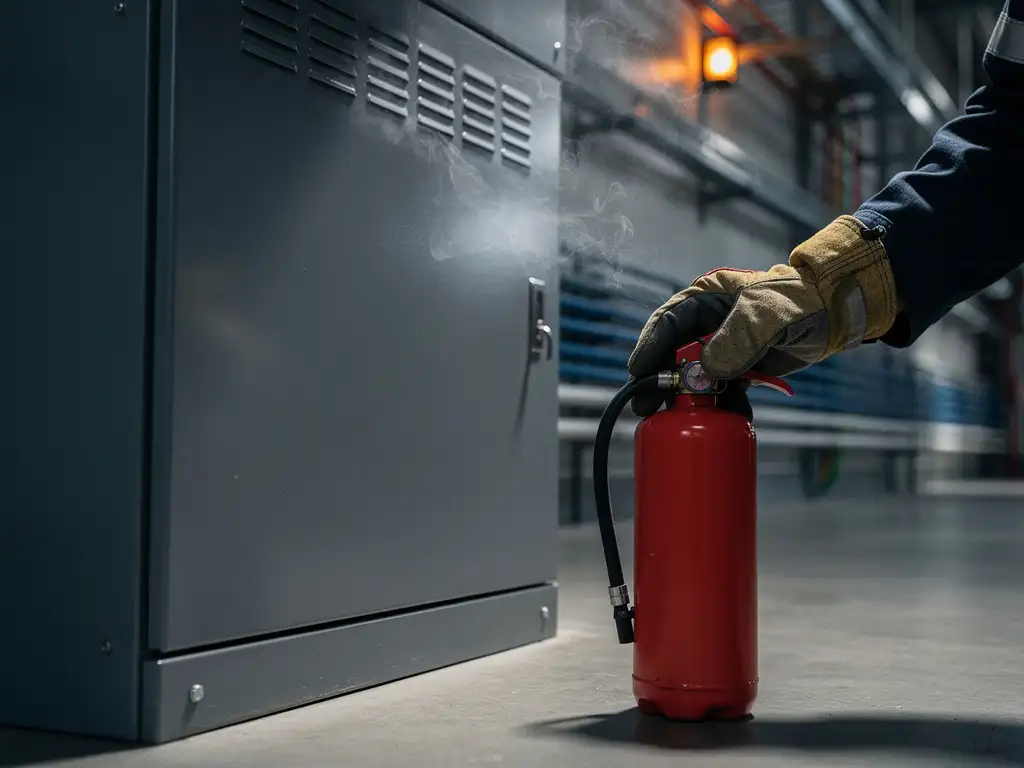
Fire prevention is built on three core principles: eliminating ignition sources, controlling fuel, and limiting oxygen supply. These principles apply across every environment, from homes to industrial facilities, and understanding them is the foundation of any effective fire safety strategy. The sections below unpack each principle and explain how they translate into practical fire safety measures.
What are the three elements that cause a fire to start?
A fire requires three elements to start: heat (an ignition source), fuel (any combustible material), and oxygen. Together, these form the fire triangle. Remove any one of the three, and combustion cannot occur or will be extinguished. This model is the foundation of all fire prevention basics and guides how fire safety measures are designed across every industry.
Understanding the fire triangle is not just theoretical. It directly informs practical fire hazard prevention strategies. For example, keeping flammable materials away from heat sources addresses the fuel-heat relationship. Ventilation controls manage oxygen availability. Electrical insulation and maintenance reduce ignition risk. Each fire prevention method targets at least one side of the triangle.
- Heat: Electrical faults, friction, open flames, and overheating equipment are common ignition sources in commercial and industrial settings.
- Fuel: Paper, wood, plastics, flammable liquids, insulation materials, and even dust can act as fuel in the right conditions.
- Oxygen: Ordinary air contains roughly 21% oxygen, which is more than sufficient to sustain combustion in most environments.
Fire prevention principles work by systematically reducing the likelihood that all three elements will combine. In high-risk environments, this means layering controls so that even if one safeguard fails, the others still prevent ignition.
How does fire prevention differ from fire suppression?
Fire prevention focuses on stopping a fire from starting in the first place, while fire suppression is the active response to a fire that has already ignited. Prevention is proactive, and suppression is reactive. Both are essential components of a complete fire safety strategy, but they operate at different stages of the fire risk cycle.
Prevention measures include risk assessments, equipment maintenance, safe storage of flammable materials, and staff training. These reduce the probability of ignition. Suppression systems, by contrast, are designed to limit damage once a fire has begun, using agents such as water, foam, CO2, or inert gases to extinguish flames or prevent them from spreading.
The most effective fire safety principles recognize that prevention and suppression are complementary, not interchangeable. A facility that relies entirely on suppression without investing in prevention is accepting a higher probability of fire incidents. Conversely, even the most rigorous prevention program cannot guarantee zero risk, which is why suppression capability remains essential.
What are the most common causes of industrial and commercial fires?
The most common causes of industrial and commercial fires are electrical faults, equipment overheating, human error, flammable material mismanagement, and arson. Electrical failures consistently rank among the leading ignition sources in commercial environments, making electrical systems a primary focus of fire hazard prevention efforts.
In industrial settings, additional causes include:
- Overloaded circuits and faulty wiring: Degraded insulation or undersized cabling generates heat that can ignite surrounding materials.
- Overheating machinery: Equipment running beyond its rated capacity or without adequate cooling can reach ignition temperatures.
- Combustible dust accumulation: In manufacturing environments, fine particles from wood, metal, or chemicals can form explosive mixtures.
- Improper storage of flammable liquids: Fuels, solvents, and lubricants stored near ignition sources create significant fire risk.
- Hot work operations: Welding, cutting, and grinding produce sparks that can ignite nearby combustibles if work areas are not properly cleared.
Understanding the most frequent causes allows facility managers and safety officers to prioritize their fire prevention measures. Risk assessments should map these causes against the specific conditions in each facility to identify where controls are most urgently needed.
What fire prevention measures apply to electrical and high-voltage equipment?
Fire prevention measures for electrical and high-voltage equipment focus on controlling heat buildup, ensuring proper insulation, maintaining equipment regularly, and monitoring for early signs of faults. Electrical fires often develop slowly, making early detection and systematic maintenance the most effective fire safety measures for these environments.
Maintenance and inspection
Regular inspection of cables, connectors, switchgear, and control panels is essential. Loose connections generate resistance heat over time, and insulation degradation can go undetected without routine checks. Thermal imaging surveys are a practical tool for identifying hotspots in electrical installations before they reach ignition temperature.
Load management and design
Electrical systems should be designed with appropriate capacity margins to prevent chronic overloading. Circuit breakers and fuses must be correctly rated for the loads they protect. In high-voltage environments, arc flash protection and proper earthing are critical components of fire hazard prevention. Cabinets and enclosures should be kept clean and free of dust accumulation, which can act as fuel or reduce heat dissipation.
For battery energy storage systems and switchgear cabinets, the enclosed nature of the equipment means that a fault can escalate quickly within a confined space. Fire prevention in these environments also involves monitoring systems that can detect thermal anomalies or gas emissions before visible smoke or flame appears.
Why is early detection a core principle of fire prevention?
Early detection is a core fire prevention principle because it allows intervention before a fire develops beyond its incipient stage, dramatically reducing damage, downtime, and risk to life. The earlier a fire is identified, the more options are available to contain or extinguish it with minimal impact on equipment and operations.
In commercial and industrial environments, fires often begin as slow-burning smoldering events, particularly in electrical enclosures. At this stage, smoke is produced before visible flame appears. Detection systems that can identify smoke particles at very low concentrations, such as aspirating smoke detection, can trigger an alert minutes or even hours before a fire becomes self-sustaining.
Early detection supports fire prevention in several ways:
- It enables human intervention before suppression is needed.
- It triggers automatic suppression systems at the earliest possible moment, limiting fire spread.
- It reduces the risk of catastrophic equipment loss by catching faults at the component level.
- It supports compliance with fire safety regulations that require detection systems in high-risk environments.
For mission-critical environments such as data centers, telecommunications infrastructure, and energy storage facilities, early detection is not just a best practice. It is a business continuity requirement. The cost of unplanned downtime or hardware replacement far exceeds the investment in a capable detection system.
What is the role of inert gas in modern fire prevention systems?
Inert gases play a suppression role in modern fire safety systems by displacing oxygen within a protected enclosure, reducing the concentration below the level needed to sustain combustion. Nitrogen is the most widely used inert gas in these applications because it is non-toxic, leaves no residue, and causes no damage to sensitive electronics or mechanical components.
Unlike water or foam-based suppression agents, inert gas systems are clean and safe for use in environments containing high-value equipment. When a fire is detected in an enclosed space, an inert gas system can flood the enclosure, extinguishing the fire without leaving chemical residues or causing secondary damage to hardware. This makes inert gas suppression particularly well-suited to server rooms, electrical cabinets, battery energy storage systems, and switchgear enclosures.
The environmental dimension is also significant. Traditional gas suppression systems have historically relied on fluorinated compounds, including those in the PFAS chemical family. These substances are associated with persistent environmental contamination and are subject to increasing regulatory restrictions. Inert gas alternatives such as nitrogen offer an effective, PFAS-free solution that aligns with both fire safety principles and sustainability requirements.
Modern inert gas systems can be stored in a non-pressurized solid state, which simplifies installation, reduces maintenance requirements, and eliminates the risks associated with high-pressure cylinders. When integrated with early smoke detection, these systems can respond to a fire at its earliest stage, limiting damage and protecting operational continuity.
How ExxFire supports fire prevention for critical equipment
ExxFire’s integrated fire detection and suppression systems are purpose-built to apply fire prevention principles at the point of highest risk: inside the enclosures that house mission-critical equipment. For facility managers, IT infrastructure directors, and safety officers responsible for protecting high-value assets, ExxFire provides a complete, certified solution that combines early detection with clean nitrogen suppression.
- Aspirating smoke detection: Identifies smoke at the earliest incipient stage, enabling rapid response before a fire develops.
- Non-pressurized nitrogen suppression: Extinguishes fires inside closed enclosures without chemical residues, protecting sensitive electronics and components.
- PFAS-free technology: Provides a sustainable alternative to fluorinated suppression agents, supporting environmental compliance.
- Easy self-installation: Pre-engineered systems require no special certification to install, reducing setup time and Total Cost of Ownership.
- Fire panel integration: Built-in relays allow seamless reporting to existing fire safety infrastructure.
- Tested and certified: Systems are validated by CNPP France and DMT, part of TÜV Nord, ensuring compliance with rigorous fire safety standards.
Whether you are protecting switchgear cabinets, server racks, battery energy storage systems, or telecom enclosures, ExxFire’s systems deliver reliable, low-maintenance fire protection aligned with the core principles of fire prevention. Contact ExxFire to discuss the right solution for your facility.
Related Articles
- How does a fire suppression system work in an E-cabinet?
- What are the IEC standards for fire detection in electrical enclosures?
- How do outdoor grills cause fires and how can you prevent them?
- How do children accidentally cause fires and how can parents prevent them?
- What are the environmental risks of halon fire suppression?