

How do you prevent fires when storing gasoline at home?
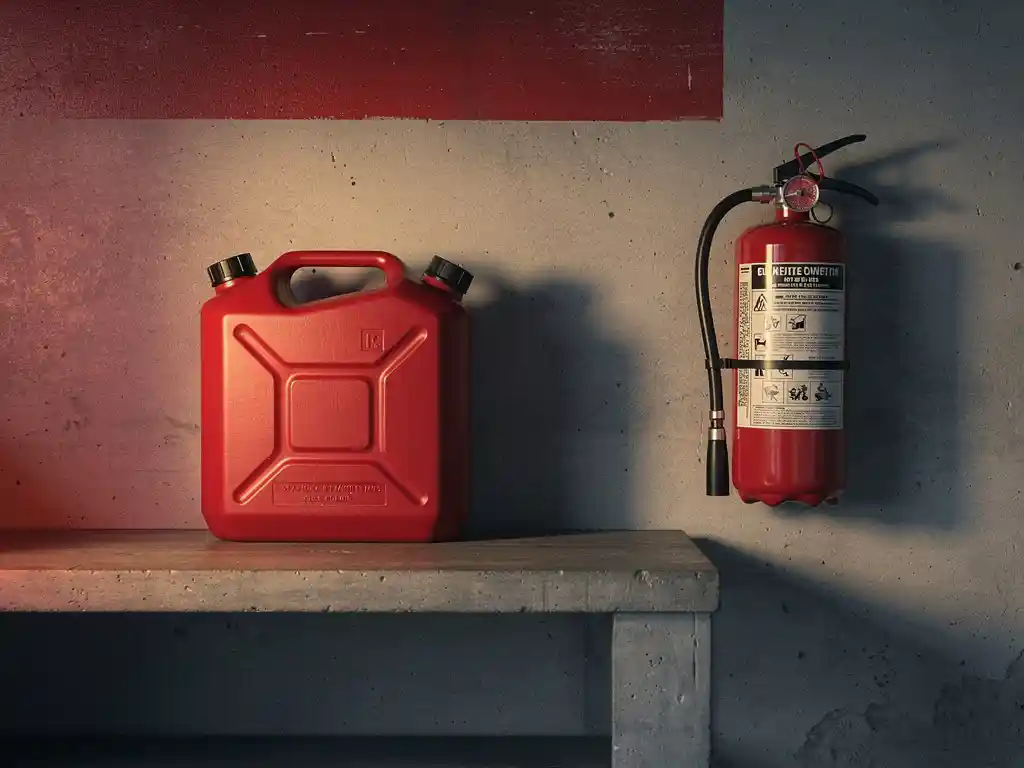
To prevent fires when storing gasoline at home, keep it in an approved, airtight container placed in a cool, well-ventilated outbuilding away from your living space and any ignition sources. Gasoline is one of the most flammable substances a homeowner can store, and improper handling is a leading cause of residential fires and explosions. The sections below cover everything from container choice and storage location to fire response and fuel degradation.
What makes gasoline so flammable and dangerous to store?
Gasoline is dangerous to store because it produces invisible, heavier-than-air vapors that ignite at temperatures as low as around minus 40 degrees Celsius. A single spark, a nearby pilot light, or even a static discharge is enough to ignite those vapors. The fuel itself does not need to be on fire for an explosion to occur — the vapor cloud surrounding an open or leaking container is the real hazard.
Several properties combine to make gasoline a particularly serious home fire hazard:
- High vapor pressure: Gasoline evaporates quickly at room temperature, releasing flammable vapors continuously into the surrounding air.
- Low flash point: The flash point of gasoline is extremely low, meaning it can ignite at virtually any normal ambient temperature.
- Wide flammability range: Gasoline vapors are flammable across a broad concentration range in air, making accidental ignition likely in enclosed or poorly ventilated spaces.
- Invisible vapors: Because you cannot see or smell a dangerous buildup until concentrations are already high, the risk is easy to underestimate.
Understanding these properties is the foundation of home gasoline fire prevention. Every safe storage practice — the container you choose, the location you pick, the quantity you keep — is designed to manage vapor accumulation and eliminate ignition sources.
What type of container should you use to store gasoline at home?
You should only store gasoline in a container that is specifically approved for flammable liquid storage, typically a red, portable fuel container made from high-density polyethylene (HDPE) or steel that meets recognized safety standards such as those set by Underwriters Laboratories (UL) or the equivalent in your country. Never use glass jars, makeshift metal cans, or plastic containers not rated for fuel.
A safe gasoline storage container has several defining features:
- A tight-sealing, childproof cap to minimize vapor escape
- A built-in flame arrester in the spout to prevent flashback ignition
- Clear capacity labeling — residential containers are typically limited to five gallons (approximately 19 liters) per container
- Color coding: red is the universally recognized color for gasoline containers, helping distinguish gasoline from diesel (yellow) or kerosene (blue)
Keep containers in good condition. Inspect them regularly for cracks, corrosion, or damaged seals. A container that once met safety standards but has deteriorated is no longer a safe option. Always keep containers closed when not actively dispensing fuel, and never fill them to the brim — leave a small amount of space to allow for thermal expansion.
Where is the safest place to store gasoline on a residential property?
The safest place to store gasoline on a residential property is in a detached, well-ventilated outbuilding such as a garden shed or detached garage, away from the main living structure, heat sources, and electrical equipment. Never store gasoline inside the home, in an attached garage, or near a water heater, furnace, or any appliance with a pilot light.
When choosing a storage location, apply these principles:
- Ventilation first: Vapors must be able to dissipate. A space with cross-ventilation at a low level is ideal, since gasoline vapors sink and pool near the floor.
- Distance from ignition sources: Keep stored fuel at least three meters away from electrical panels, power tools, lawnmowers with hot engines, and any open flame.
- Cool and dry conditions: Heat accelerates vapor production. Avoid locations that receive prolonged direct sunlight or reach high temperatures in summer.
- Out of reach of children: Store containers on a high shelf or in a locked cabinet, even in a shed.
- Quantity limits: Most fire codes restrict residential storage to a maximum of around 25 liters (approximately five to six gallons). Check your local regulations, as limits vary.
Even in the best location, storing only the amount of gasoline you actually need reduces risk significantly. Buying fuel in smaller quantities more frequently is safer than maintaining a large reserve.
How long can you safely store gasoline before it degrades?
Untreated gasoline stored in a sealed, approved container typically remains usable for three to six months. After that, oxidation and evaporation of lighter compounds cause the fuel to degrade, forming gums and varnish that can clog engines and reduce ignition reliability. Gasoline treated with a fuel stabilizer can last up to one to two years under proper storage conditions.
Degraded gasoline is not just an engine problem — it is also a gasoline fire hazard at home. Old fuel that has partially evaporated may leave behind residues that are harder to ignite but still flammable, and the vapor mix from degraded gasoline can behave unpredictably. To manage this safely:
- Label every container with the date of purchase
- Rotate stock by using older fuel first and topping up with fresh fuel
- Add a commercially available fuel stabilizer if you know the gasoline will be stored beyond two months
- Dispose of old or contaminated gasoline at a designated hazardous waste facility — never pour it down a drain or onto soil
What are the most common causes of gasoline fires at home?
The most common causes of gasoline fires at home are improper container storage, refueling near ignition sources, spills that are not cleaned up promptly, and storing gasoline inside living spaces or attached garages. Many residential gasoline fires are caused not by negligence but by a simple lack of awareness about how easily vapors travel and accumulate.
Ignition from nearby appliances
Pilot lights on water heaters, gas furnaces, and kitchen appliances are a frequent ignition source. Gasoline vapors are heavier than air and travel along the floor, meaning a container stored in a garage can release vapors that drift under a door and reach a pilot light several meters away. This is why attached garages and interior storage are consistently identified as high-risk locations.
Refueling mistakes
Filling a lawnmower, generator, or other small engine while it is still hot or running is one of the most preventable causes of gasoline fires. Always allow engines to cool completely before refueling. Spilled fuel on a hot engine surface can ignite instantly. Similarly, refueling outdoors rather than in an enclosed space dramatically reduces the risk of vapor buildup.
What should you do if a gasoline fire starts at home?
If a gasoline fire starts at home, evacuate immediately, call emergency services, and do not attempt to extinguish a large or spreading fire yourself. Gasoline fires spread rapidly and can produce toxic smoke. If the fire is very small and contained — such as a spill that has just ignited — a dry chemical or CO2 fire extinguisher rated for Class B fires (flammable liquids) may be used, but only if you have a clear escape route behind you.
Key actions to take and avoid:
- Do: Alert everyone in the building and evacuate without delay
- Do: Call emergency services from a safe distance
- Do: Use a Class B fire extinguisher on a very small, contained fire only if it is safe to do so
- Do not: Use water on a gasoline fire — water spreads burning fuel and intensifies the fire
- Do not: Re-enter the building to retrieve belongings
- Do not: Open windows or doors unnecessarily, as this feeds oxygen to the fire
Prevention remains far more effective than any emergency response. Keeping stored quantities small, containers sealed, and ignition sources separated gives you the best chance of never facing a gasoline fire in the first place.
How ExxFire helps protect against fire hazards in high-risk environments
While the tips above address residential gasoline storage safety, fire risk in professional and industrial environments — where flammable substances, electrical equipment, and high-value assets coexist — demands a more systematic approach. ExxFire’s integrated fire detection and suppression systems are purpose-built for exactly these scenarios.
ExxFire’s systems combine aspirating smoke detection with non-pressurized nitrogen gas suppression, delivering early intervention before a fire can spread. Key features include:
- Early smoke detection: Aspirating detection identifies combustion at the pre-fire stage, giving maximum response time
- Clean nitrogen suppression: Non-pressurized nitrogen leaves no chemical residue, protecting sensitive electronics and high-value components without secondary damage
- PFAS-free technology: ExxFire’s patented Cool Gas Generator technology is a sustainable alternative to legacy suppression agents, meeting the growing demand for environmentally responsible fire safety
- Easy installation: Systems are pre-engineered for self-installation without specialist certification, reducing Total Cost of Ownership
- Certified performance: All systems are tested and certified by CNPP France and TÜV Nord, providing confidence in regulated environments
Whether protecting electrical switchgear, server rooms, or Battery Energy Storage Systems, ExxFire delivers reliable, clean, and certified fire protection. Contact ExxFire to discuss the right fire suppression solution for your environment.
Related Articles
- What are the fire protection requirements for outdoor electrical enclosures?
- How do you prevent fires in a multi-story building?
- What are the basic principles of fire prevention?
- Why is fire suppression agent selection a sustainability decision?
- What is the difference between suppression and prevention in fire safety?