

What are the consequences of non-compliance with fire safety standards?
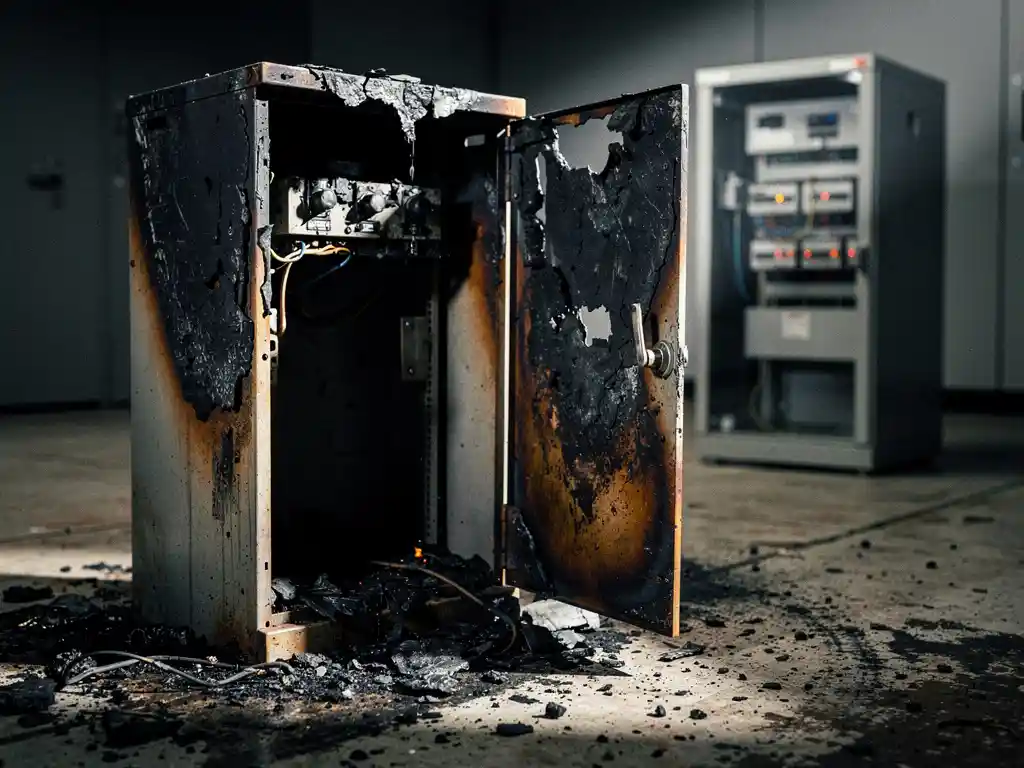
Non-compliance with fire safety standards can result in severe financial penalties, criminal liability, forced operational shutdowns, and lasting reputational damage. These consequences apply to businesses across all sectors, but they fall hardest on industrial facilities where fire risks are elevated and regulatory scrutiny is intense. The sections below address the most common questions safety and compliance managers ask when assessing the real cost of falling short of fire code requirements.
What penalties can businesses face for violating fire safety codes?
Businesses that violate fire safety codes face penalties ranging from formal improvement notices and monetary fines to prosecution of responsible individuals and mandatory closure of premises. The severity depends on the jurisdiction, the nature of the violation, and whether the breach resulted in harm. Repeat offenders or those who ignore enforcement notices typically face the steepest consequences.
In most jurisdictions, fire safety enforcement follows a graduated approach. Authorities begin with inspection findings and written notices requiring remediation within a defined timeframe. If a facility fails to act, regulators can escalate to prohibition notices that restrict or halt operations entirely until the hazard is addressed.
Criminal prosecution is a real outcome for serious or persistent violations. In the United Kingdom, for example, the Regulatory Reform (Fire Safety) Order 2005 allows prosecution of the “responsible person,” which can be an individual manager or a corporate entity. In the United States, NFPA codes and local fire ordinances carry civil and criminal enforcement mechanisms at the state and municipal level. Fines for fire code violations commonly run into tens of thousands of dollars per violation, and in egregious cases, custodial sentences have been imposed on responsible managers.
How does non-compliance affect liability in the event of a fire?
When a fire occurs at a non-compliant facility, the business and its responsible managers face significantly elevated legal liability. Non-compliance effectively demonstrates negligence, making it far easier for injured parties, insurers, and regulators to establish that the organization failed in its duty of care. This can lead to civil lawsuits, insurance disputes, and criminal charges simultaneously.
Insurance coverage is one of the most immediate casualties of non-compliance. Most commercial property and liability policies include clauses that void or reduce coverage when the insured party has not maintained legally required fire safety measures. A business that suffers a major fire loss and is found to have been operating without functioning suppression systems, outdated detection equipment, or expired inspections may find its insurer unwilling to pay out, leaving the organization to absorb the full financial impact of the event.
Directors and senior managers carry personal exposure as well. In many legal systems, health and safety legislation allows regulators to pierce the corporate veil and prosecute individuals who were responsible for safety decisions. A compliance failure that results in injury or death can therefore end careers and result in personal financial liability, not just corporate penalties.
What are the financial costs of a fire safety compliance failure?
The financial costs of a fire safety compliance failure extend well beyond the initial fine. Direct costs include regulatory penalties, legal fees, increased insurance premiums, and the expense of emergency remediation. Indirect costs, which are often far larger, include production downtime, asset replacement, reputational damage, and lost contracts or clients who lose confidence in the organization.
Operational downtime is frequently the largest single cost driver. When a fire damages mission-critical equipment such as electrical switchgear, server infrastructure, or process control systems, the time required to source replacement hardware, restore data, and recommission systems can translate into weeks or months of reduced capacity. For manufacturing or processing facilities, every day of downtime carries a direct revenue cost.
Remediation costs after a compliance failure are also typically higher than the investment required to achieve compliance in the first place. Emergency procurement of fire suppression equipment, expedited installation, and post-incident audits all carry premium pricing. Organizations that treat fire safety investment as a low-priority budget line often discover that reactive spending far exceeds what proactive compliance would have cost.
Which industries face the strictest fire safety compliance requirements?
The industries subject to the strictest fire safety compliance requirements are those where fire hazards are most severe and the consequences of failure are most catastrophic. These include oil and gas, petrochemicals, mining, manufacturing, data center operations, and energy storage. Facilities in these sectors typically fall under multiple overlapping regulatory frameworks, including NFPA standards, FM Global guidelines, and ATEX directives for explosive atmospheres.
Oil, gas, and petrochemical facilities
These environments combine flammable substances, high-pressure systems, and complex equipment in ways that make fire and explosion risks exceptionally high. Compliance requirements here are layered, drawing on NFPA 30 for flammable liquids, NFPA 72 for fire alarm systems, ATEX or NEC standards for equipment in hazardous areas, and site-specific requirements from insurers such as FM Global. Inspections are frequent, documentation requirements are extensive, and the consequences of non-compliance include the loss of operating licenses.
Energy storage and electrical infrastructure
Battery energy storage systems (BESS) and high-voltage electrical infrastructure have come under intensifying regulatory scrutiny as adoption has grown rapidly. Standards such as NFPA 855 for stationary energy storage systems set detailed requirements for detection, suppression, and spacing. Electrical switchgear and ICT infrastructure in industrial settings must also meet relevant IEC and local electrical safety standards. The combination of high asset value and fire risk from thermal runaway makes compliance in this sector both technically demanding and commercially critical.
How can facilities close fire safety compliance gaps before an inspection?
Facilities can close fire safety compliance gaps before an inspection by conducting a structured internal audit against the applicable standards, prioritizing high-risk areas, addressing documentation deficiencies, and upgrading detection and suppression systems where current equipment does not meet current code requirements. Starting this process well in advance of a scheduled inspection gives the organization time to remediate without resorting to costly emergency procurement.
A practical compliance gap closure process typically involves the following steps:
- Identify the applicable standards: Confirm which NFPA codes, local fire ordinances, ATEX directives, or FM Global requirements apply to each area of the facility. Different zones may fall under different frameworks.
- Conduct a zone-by-zone risk assessment: Walk through the facility and document every area where fire detection or suppression coverage is absent, inadequate, or based on outdated technology.
- Review maintenance and inspection records: Inspectors frequently cite record-keeping failures as violations even when the physical systems are in good order. Ensure all inspection logs, service certificates, and equipment certifications are current and accessible.
- Prioritize critical enclosures: Electrical cabinets, switchgear, server rooms, and energy storage systems represent concentrated fire risk. These should be addressed first because they are both high-risk and subject to high scrutiny during inspections.
- Engage a qualified fire safety consultant: For complex industrial environments, an independent third-party assessment provides an objective view of gaps and helps build the business case for investment with senior leadership.
One common gap in industrial facilities is the absence of localized suppression within individual equipment enclosures. Even where room-level systems exist, a fire that starts inside a cabinet can cause significant damage before a room-level detector triggers. Addressing this gap with integrated detection and suppression at the enclosure level is increasingly recognized as best practice under current standards.
How ExxFire helps with fire safety compliance
ExxFire’s integrated fire detection and suppression systems are designed specifically to address the compliance and protection challenges that industrial facilities face when safeguarding critical electrical enclosures. The systems combine aspirating smoke detection with non-pressurized nitrogen gas suppression, delivering early warning and automatic extinguishment directly at the source of a fire inside switchgear, electrical cabinets, battery energy storage systems, and server racks up to 4.5 m³ in volume.
Key features that support compliance and operational continuity include:
- CNPP-certified performance: Systems are tested and certified by CNPP in France, providing documented third-party validation that supports regulatory inspections and insurer requirements.
- PFAS-free, residue-free suppression: Nitrogen leaves no chemical residue, protecting sensitive electronics and avoiding the regulatory and environmental liabilities associated with PFAS-containing agents.
- Easy self-installation without special certification: Pre-engineered systems reduce installation complexity, lowering the cost and time required to close compliance gaps across multiple enclosures.
- Fire panel integration via built-in relays: Systems report status to existing fire panels, ensuring seamless integration with the facility’s broader fire safety infrastructure and simplifying documentation for inspectors.
- Scalable protection: Multiple units can be interconnected to protect larger volumes, making the solution adaptable to diverse industrial enclosure configurations.
If your facility has upcoming inspections or identified gaps in enclosure-level fire protection, contact ExxFire to discuss how its systems can help you meet current standards and protect your most critical assets.
Related Articles
- What is the difference between a fire hazard and a fire risk?
- What is post-fire management and why is it important?
- Can fire management help restore degraded landscapes?
- What is off-gas detection and how does it prevent fires?
- How do you evaluate a fire suppression vendor's certifications before buying?