

What is a fire management zone?
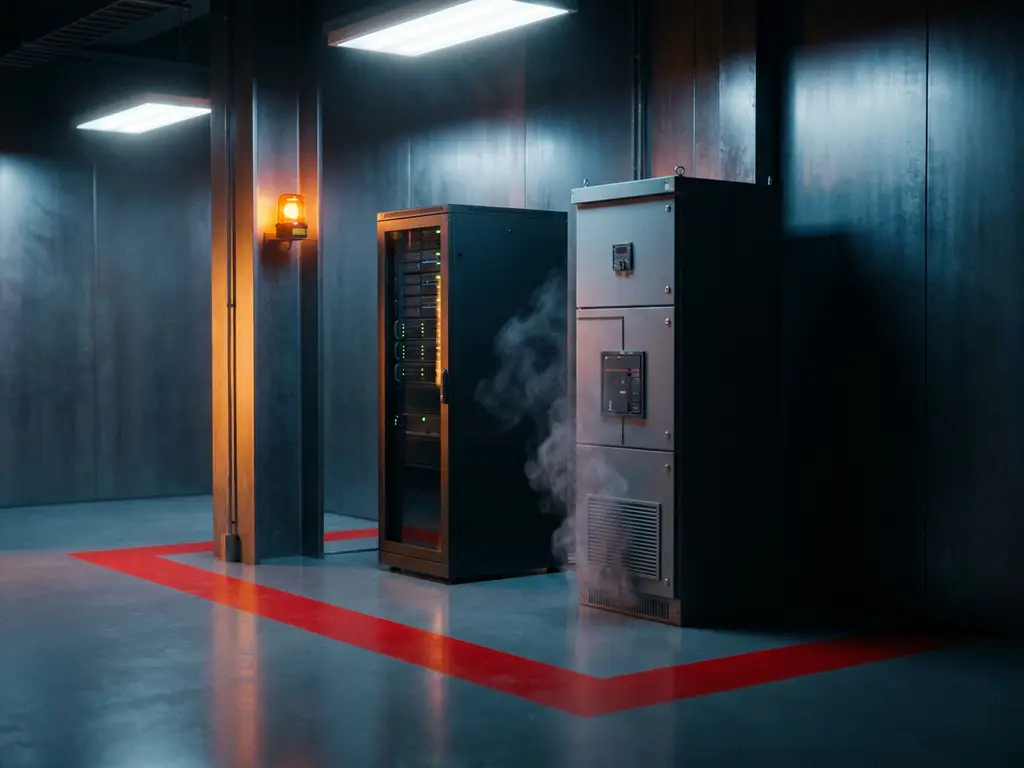
A fire management zone is a defined area within a building or facility that is treated as a single unit for the purposes of fire detection, alarm, and suppression. Each zone is mapped, monitored, and controlled independently, so that a fire event in one area can be identified, contained, and responded to without affecting the entire building. The sections below unpack how zones are structured, why their size matters, and how they shape compliance requirements.
How are fire management zones divided in a building?
Fire management zones in a building are divided based on physical boundaries, occupancy type, risk level, and the practical reach of detection and suppression equipment. A zone typically corresponds to a floor, a wing, a room, or a specific functional area such as a server room or switchgear hall. The goal is to ensure that any fire event can be pinpointed quickly and addressed without triggering a response across unaffected parts of the building.
In practice, several factors drive how zones are drawn:
- Physical construction: Fire-rated walls, floors, and doors naturally define compartment boundaries. A zone rarely spans a fire-rated barrier because those barriers are designed to limit fire spread.
- Occupancy and use: Areas with different fire loads or occupancy types, such as an office versus an electrical plant room, are typically zoned separately to reflect their different risk profiles.
- Detection coverage: Each detection zone must fall within the coverage limits of the sensors assigned to it. Oversized zones reduce the precision of alarm localization.
- Access and evacuation routes: Zones are often aligned with evacuation zones so that building occupants and emergency services can act on alarm information directly.
In large facilities, a single floor may be divided into multiple fire safety zones if the floor houses areas with significantly different risk levels or equipment types. A data hall, a UPS room, and a general office area on the same floor would each warrant its own zone designation.
What is the difference between a fire detection zone and a fire suppression zone?
A fire detection zone is the area monitored by a set of sensors that report to a common alarm point, while a fire suppression zone is the area covered by a suppression system designed to extinguish or control a fire within that boundary. Detection zones define where a fire is identified; suppression zones define where an active response is deployed. The two do not always align perfectly.
Detection zones are mapped to fire alarm control panels. When a detector within a zone triggers, the panel identifies that zone as the source of the alarm. The zone boundary determines how quickly the fire’s location can be communicated to occupants and emergency responders. A well-defined detection zone reduces the time between alarm and accurate localization.
Suppression zones operate differently. A suppression system, whether gaseous, water-based, or another medium, is engineered to protect a specific volume or enclosure. The suppression zone must match the protected volume closely enough that the agent reaches the fire before it spreads beyond the zone boundary. In object protection applications, such as a server rack or electrical cabinet, the suppression zone can be as small as a single enclosure, far smaller than the detection zone covering the room it sits in.
The distinction matters operationally. A detection zone might cover an entire server room, alerting staff to a fire somewhere in that space. The suppression zone, however, may be the individual cabinet where the fire originated, allowing the agent to be discharged precisely at the source without flooding the wider room. This layered approach improves both effectiveness and the protection of surrounding equipment.
Why does zone size affect fire suppression effectiveness?
Zone size directly affects suppression effectiveness because a suppression agent must reach a sufficient concentration within the protected volume to extinguish a fire. If the zone is too large, the agent dilutes before reaching the necessary concentration. If the zone is too small or poorly sealed, the agent escapes before it can act. Matching zone size to the suppression system’s designed output is a fundamental engineering requirement.
For gaseous suppression systems, the relationship between zone volume and agent concentration is calculated precisely. The agent must achieve and hold a minimum design concentration for a defined holding period, typically measured in minutes. A larger zone requires a proportionally larger quantity of agent. If the zone volume exceeds what the installed system can fill, the suppression attempt will fail even if the system activates correctly.
Enclosure integrity is equally important. A zone with unsealed cable penetrations, open ventilation paths, or poorly fitting doors will lose agent rapidly. This is why object-level protection, where the suppression zone is the cabinet or enclosure itself, can outperform room-level systems for protecting individual high-value assets. The smaller, more controlled volume allows the agent to reach and maintain the required concentration far more reliably.
Zone size also affects detection speed. A smaller, well-defined fire detection zone means that a single triggered sensor points to a more precise location. In a large open zone, the same sensor activation tells you only that a fire is somewhere within a broad area, which slows the response and increases the risk of damage before suppression begins.
What equipment typically defines its own fire management zone?
Equipment that defines its own fire management zone is typically high-value, mission-critical, or capable of generating a fire that could spread rapidly if not contained at the source. Server racks, electrical switchgear cabinets, battery energy storage systems, UPS units, power distribution units, and high-voltage cabinets are the most common examples. Each of these assets combines significant fire risk with significant replacement cost and operational dependency.
The rationale for treating individual equipment as its own zone is straightforward. These assets often contain concentrated ignition sources, such as electrical faults, overheating batteries, or arc flash events, that can escalate quickly within the enclosure before spreading to the wider room. Assigning them their own fire safety zone allows detection to be placed as close as possible to the ignition risk and suppression to be discharged directly into the enclosure.
In practice, this means aspirating smoke detection is often integrated directly into the equipment enclosure, sampling air from within the cabinet rather than relying on ceiling-mounted detectors in the surrounding room. The suppression system is similarly sized and sealed to the enclosure volume. This approach is sometimes called object protection, and it is particularly effective for environments where a room-level suppression response would damage other sensitive equipment or where the fire risk is concentrated in specific assets rather than distributed across the space.
Other equipment types that commonly warrant their own zone include telecommunications enclosures, industrial control cabinets, and medical imaging equipment in healthcare facilities. Any asset where downtime carries disproportionate operational or financial consequences is a candidate for dedicated zone treatment.
How do fire management zones affect compliance and certification requirements?
Fire management zones directly shape compliance and certification requirements because most fire safety standards, building codes, and insurance frameworks specify zone-level performance criteria. The size of each zone, the type of detection used within it, the suppression method applied, and the documentation of zone boundaries all form part of the compliance record that regulators, certifiers, and insurers review.
National and international standards, including EN 54 in Europe and NFPA standards in North America, set out how detection zones must be configured, what coverage each detector type must achieve, and how zone boundaries must be documented on fire safety drawings. Non-compliance at the zone level, such as a zone that exceeds the permitted area for a given detector type, can invalidate a system’s certification even if the hardware itself meets specification.
For suppression systems, certification requirements are more specific still. Systems protecting defined enclosures or zones must demonstrate through testing that they achieve the required agent concentration within the protected volume. Third-party test certification, such as that carried out by CNPP in France or TÜV Nord in Germany, validates that a system performs as designed within a specified zone configuration. Without this certification, systems may not satisfy insurance requirements or be accepted by building control authorities.
Zone documentation also affects ongoing compliance. Many jurisdictions require that fire safety zone maps are maintained, updated when layouts change, and made available to emergency services. Changes to equipment placement, enclosure configuration, or building partitioning that alter zone boundaries must be reflected in updated fire risk assessments and system documentation. Treating zone management as a living part of fire safety governance, rather than a one-time design decision, is essential for sustained compliance.
How ExxFire supports fire management zone protection
ExxFire’s combined fire detection and suppression systems are purpose-built for object-level zone protection, securing high-value equipment at the source of fire risk. Key features include:
- Aspirating smoke detection integrated into the enclosure, providing early warning precisely within the defined zone rather than relying on room-level sensors
- Non-pressurized nitrogen gas suppression sized to the enclosure volume, ensuring the correct agent concentration is achieved within the protected zone
- PFAS-free, residue-free extinguishing agent that leaves sensitive electronics undamaged after activation
- Relay outputs for fire panel integration, so zone status is reported to the wider building fire management system
- Third-party certification by CNPP France and DMT/TÜV Nord, supporting compliance and insurance requirements
- Easy installation without specialist certification, reducing the cost and complexity of bringing a new zone into service
Whether you are protecting a single server rack, a row of switchgear cabinets, or a battery energy storage installation, ExxFire’s integrated detection and suppression systems provide a certified, maintenance-free solution matched to your zone requirements. Contact ExxFire to discuss the right configuration for your facility.
Related Articles
- How does fire prevention differ for apartments vs. Houses?
- Should you use a fire blanket or an extinguisher to put out a kitchen fire?
- What are the fire prevention rules for holiday decorations?
- What is the future of fire suppression technology in a low-carbon economy?
- How do you transition from PFAS-based to PFAS-free fire suppression?