

What are the fire prevention responsibilities of a landlord?
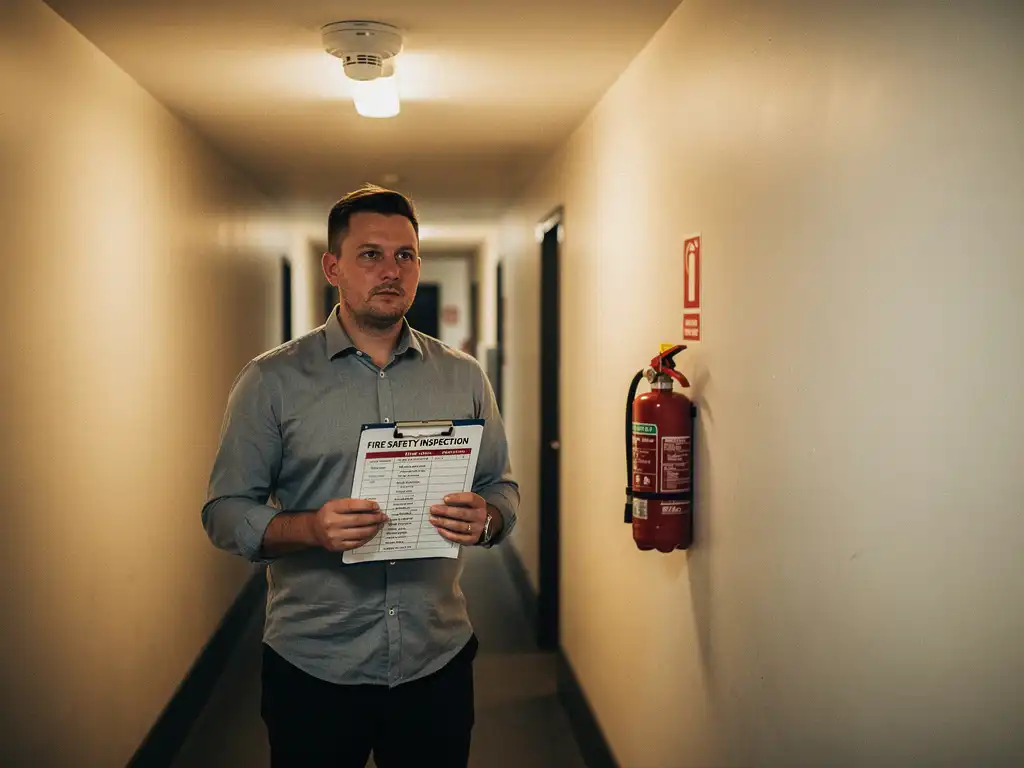
Landlords carry clear legal responsibilities for fire prevention in any property they let, whether residential or commercial. These duties cover everything from conducting fire risk assessments to installing appropriate detection systems and maintaining safe escape routes. Understanding exactly what the law requires protects both tenants and the landlord from serious legal and financial consequences. The sections below unpack each key obligation in detail.
What fire safety laws apply to landlords?
Landlords in the UK are bound by several pieces of legislation that set out their fire prevention responsibilities. The most significant is the Regulatory Reform (Fire Safety) Order 2005, which applies to all non-domestic premises and requires the responsible person to take general fire precautions and conduct regular risk assessments. For residential landlords, the Housing Act 2004 and associated regulations also impose specific requirements around smoke alarms and carbon monoxide detectors.
In 2026, the Fire Safety (England) Regulations 2022 continue to add further obligations for multi-occupancy residential buildings, particularly those above 11 metres in height, including requirements for regular inspections of fire doors and information sharing with residents. Landlords of commercial premises must also comply with any sector-specific guidance issued by their local fire and rescue authority.
The core principle running through all of this legislation is that the responsible person must proactively manage fire risk rather than simply react to incidents. For most tenancies, that responsible person is the landlord, unless the lease formally transfers that duty to the tenant.
What does a landlord’s fire risk assessment involve?
A landlord’s fire risk assessment is a structured evaluation of the property to identify fire hazards, determine who is at risk, and put in place measures to eliminate or reduce those risks. It must be documented in writing for premises with five or more employees or for licensed properties, and it should be reviewed regularly or whenever significant changes occur.
A thorough fire risk assessment typically covers the following areas:
- Identifying ignition sources such as electrical equipment, heating systems, and any processes that generate heat or sparks
- Identifying fuel sources including stored materials, furnishings, and waste
- Assessing the people at risk, particularly those who may have difficulty evacuating, such as disabled occupants or those unfamiliar with the building
- Evaluating existing fire precautions, including detection systems, suppression equipment, escape routes, and signage
- Recording findings and implementing improvements where gaps are identified
- Reviewing the assessment periodically or after any material change to the premises or its use
For complex commercial properties or buildings with high-value technical installations, landlords often engage a qualified fire risk assessor to carry out this process. A poorly conducted assessment is not just a compliance failure – it can leave tenants and assets genuinely unprotected.
What fire detection and alarm systems must landlords provide?
Landlords must provide fire detection and alarm systems that are appropriate to the size, layout, and use of the property. For residential lettings, current regulations require at least one smoke alarm on every floor and a carbon monoxide detector in any room containing a solid fuel appliance. Commercial landlords must ensure their detection systems meet the standards set out in their fire risk assessment and comply with BS 5839.
The specific type of system required depends on the occupancy and risk profile of the building. A small office may need a basic L2 or L3 detection system, while a data centre or industrial facility housing sensitive equipment will typically require a more sophisticated approach, including aspirating smoke detection that can identify smoke particles at very early stages before a fire develops.
Regardless of property type, landlords must ensure that:
- Detection systems are regularly tested and maintained
- Alarms are audible throughout the building
- Systems are compatible with any existing fire panel infrastructure
- Records of testing and maintenance are kept and available for inspection
Who is responsible for fire safety in a rented commercial property?
In a rented commercial property, fire safety responsibility is shared between the landlord and the tenant, and the exact split depends on the terms of the lease. Under the Regulatory Reform (Fire Safety) Order 2005, the responsible person is whoever has control of the premises. In practice, this means both parties can hold obligations simultaneously for different parts of the building.
The landlord typically retains responsibility for common areas, the structural fabric of the building, shared escape routes, and any fire safety systems that serve the whole property. The tenant is usually responsible for fire safety within their own demised area, including their equipment, processes, and any modifications they make to the space.
Where a lease is silent on the matter, or where the landlord retains significant control, fire authorities are likely to treat the landlord as the primary responsible person. It is therefore essential that commercial leases clearly define fire safety obligations, and that both parties understand what they are expected to maintain, inspect, and fund.
What happens if a landlord fails to meet fire safety obligations?
A landlord who fails to meet their fire prevention responsibilities faces serious legal, financial, and reputational consequences. Enforcement action can be taken by the local fire and rescue authority, which has the power to issue enforcement notices, prohibition notices, and in severe cases, prosecute the responsible person in court.
Penalties under the Regulatory Reform (Fire Safety) Order 2005 can include unlimited fines and up to two years in prison for the most serious breaches. Beyond criminal liability, a landlord may also face civil claims from tenants or employees who suffer injury or loss as a result of inadequate fire precautions.
Practical consequences can be equally damaging. A prohibition notice can prevent a building from being occupied until deficiencies are remedied, leading to lost rental income and potential breach of lease obligations. Insurance policies may also be voided if a landlord is found to have failed their legal duties, leaving them fully exposed to the cost of fire damage.
How can landlords protect high-value equipment from fire in commercial premises?
Protecting high-value equipment in commercial premises requires more than standard building-level fire detection. Electrical cabinets, server racks, switchgear, and battery storage systems represent concentrated points of fire risk, and a fire that starts inside one of these enclosures can cause catastrophic damage before a ceiling-mounted detector even registers smoke. Landlords and their tenants should consider object-level fire protection for any enclosure housing critical or expensive equipment.
Effective protection for high-value equipment typically involves:
- Early smoke detection at the source, using aspirating systems that sample air from within the enclosure
- Suppression that activates automatically and immediately at the point of origin
- Clean agents that do not damage sensitive electronics or leave chemical residues
- Systems that integrate with existing fire panels to alert building management without triggering a full building evacuation for a contained incident
Choosing a suppression agent that is free from PFAS chemicals is also increasingly important from a regulatory and environmental standpoint, as restrictions on fluorinated compounds continue to tighten across Europe and beyond.
How ExxFire helps landlords protect critical equipment from fire
ExxFire’s integrated fire detection and suppression systems are purpose-built for exactly the kind of object-level protection that commercial premises require. Each system combines aspirating smoke detection with non-pressurized nitrogen gas suppression, delivering a fast, clean, and effective response to fire at the source before it can spread to the wider building.
Key features that make ExxFire’s systems well suited to landlords and their tenants include:
- PFAS-free nitrogen suppression that leaves no chemical residue and causes no secondary damage to electronics
- Pre-engineered design for easy self-installation inside server racks, electrical cabinets, and switchgear enclosures up to 4.5 m³
- Built-in relay outputs that report system status to an existing fire panel, ensuring seamless integration with building fire safety infrastructure
- CNPP-certified and TÜV Nord-tested technology, providing the documented compliance evidence that landlords and insurers increasingly require
- Low maintenance and low total cost of ownership, making it a practical long-term investment for any commercial property
Whether you manage a single commercial unit or a portfolio of facilities housing sensitive equipment, ExxFire’s systems help you meet your fire prevention responsibilities while protecting the assets that matter most. Contact ExxFire today to discuss the right solution for your premises.