

What regulations govern fire suppression agent emissions in the EU?
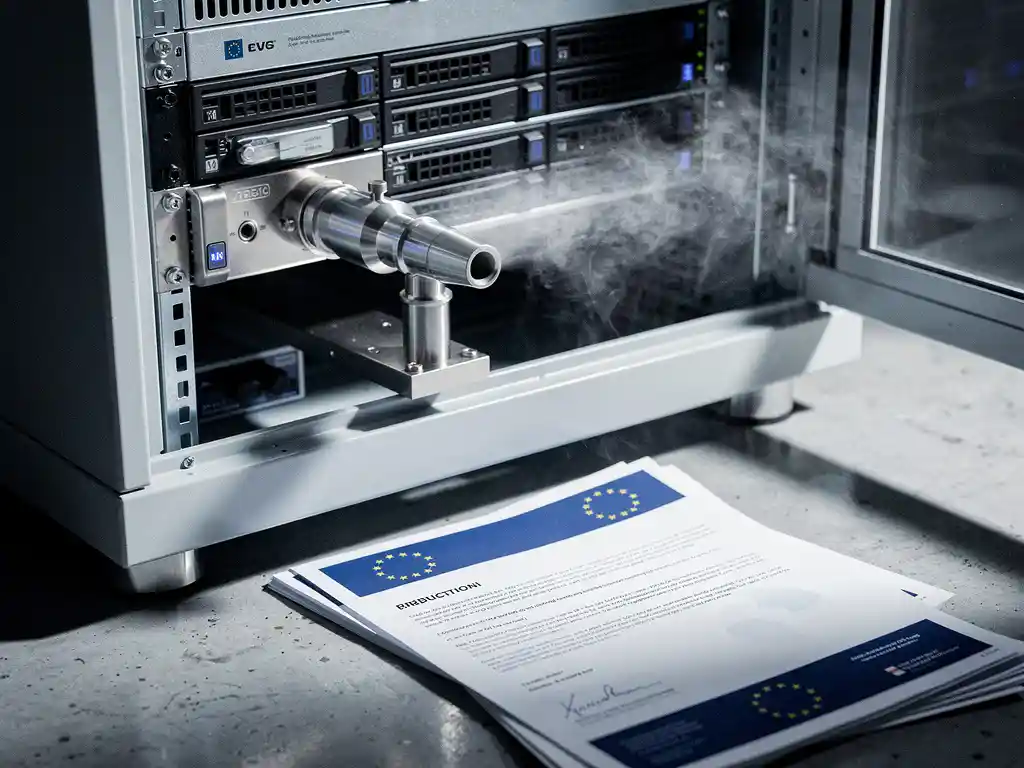
Fire suppression agent emissions in the EU are governed by a combination of overlapping regulatory frameworks, including the F-Gas Regulation, the REACH restriction on PFAS, and the Industrial Emissions Directive. These rules apply to organizations that install, maintain, or decommission suppression systems containing fluorinated gases or persistent chemical agents. The sections below unpack each regulation, which agents are affected, and what compliance looks like in practice.
Which EU regulations directly restrict fire suppression agents?
Several EU regulations directly restrict fire suppression agents, with the most relevant being Regulation (EU) No 517/2014 on fluorinated greenhouse gases (F-Gas Regulation), the REACH Regulation (EC) No 1907/2006 as amended by PFAS restriction proposals, and the Ozone Depleting Substances Regulation (EU) No 1005/2009. Together, these frameworks control which agents can be used, how they must be handled, and when they must be phased out.
The F-Gas Regulation targets hydrofluorocarbons (HFCs) and other fluorinated gases with high global warming potential (GWP). It sets phase-down schedules, bans certain applications where alternatives exist, and requires certified personnel to handle regulated substances. The Ozone Depleting Substances Regulation separately prohibits halon-based agents, which were widely used in fire suppression until their phase-out was completed under the Montreal Protocol and its EU implementing rules. The REACH framework adds a further layer by targeting the chemical properties of agents regardless of their climate impact, focusing instead on persistence, toxicity, and bioaccumulation.
For organizations operating fire suppression systems, compliance is not optional. These regulations apply to system owners and operators, not only to manufacturers or installers, meaning facility managers and health and safety officers carry direct legal responsibility.
What fire suppression agents are being phased out under EU law?
Under EU law, the agents being phased out include halon gases (already banned except for critical-use exemptions), HFC-based agents such as HFC-227ea and HFC-125, and PFAS-containing agents including many fluorinated foam concentrates. The pace of phase-out depends on the specific substance and its GWP or chemical classification.
Halon 1301 and Halon 1211 were among the most widely deployed suppression agents for decades. Their production and use are now prohibited across the EU, with narrow exemptions remaining for aviation and military applications. HFC-based clean agents, though introduced as halon replacements, face increasing restrictions under the F-Gas Regulation’s phase-down trajectory. As the EU tightens its HFC quota system, the availability of these gases is shrinking and costs are rising.
Fluorinated foam agents, particularly aqueous film-forming foam (AFFF) concentrates containing PFAS, face the most aggressive regulatory pressure. These substances do not break down in the environment, and their use is being restricted through the REACH process. The transition away from these agents is well underway across the EU, and organizations that have not yet evaluated their current suppression systems should treat this as an urgent compliance matter rather than a future consideration.
How does the REACH PFAS restriction affect fire suppression systems?
The REACH PFAS restriction directly affects fire suppression systems that use fluorinated foam concentrates or other agents containing per- and polyfluoroalkyl substances. Under the proposed universal PFAS restriction – developed by authorities from Germany, the Netherlands, Denmark, Sweden, and Norway – the manufacture, use, and placing on the market of PFAS-containing substances would be broadly prohibited, with transitional periods depending on the application.
PFAS fire suppression agents are specifically identified as a concern because they are released directly into the environment during testing, accidental discharge, and system maintenance. Unlike many industrial PFAS uses, fire suppression discharges can contaminate soil and groundwater rapidly, making them a priority target for regulators. The restriction covers not only AFFF foams but potentially any agent where fluorinated compounds are present as functional ingredients.
For organizations currently operating PFAS-containing suppression systems, the practical implication is clear: planning for replacement is no longer optional. The transitional periods built into REACH restrictions are intended to allow organizations time to switch to compliant alternatives, not to delay action indefinitely. Procuring and installing a PFAS-free suppression solution before mandatory deadlines avoids both compliance risk and the disruption of emergency replacement under regulatory pressure.
Are inert gas suppression systems exempt from EU emissions regulations?
Yes, inert gas suppression systems are generally exempt from EU emissions regulations that target fluorinated gases and PFAS. Agents such as nitrogen (N2), argon, and CO2 are not fluorinated greenhouse gases, are not classified as PFAS, and do not fall within the scope of the F-Gas Regulation or the REACH PFAS restriction. This makes inert gas systems the most straightforward compliance choice under current and anticipated EU rules.
Nitrogen, in particular, is an entirely benign suppression agent from a regulatory standpoint. It is a naturally occurring component of the atmosphere, leaves no chemical residues, and poses no bioaccumulation risk. Systems based on nitrogen suppression do not require the certified technician handling obligations that apply to F-gas systems, and they are not subject to the quota-driven cost increases that are making HFC agents increasingly expensive to source.
It is worth noting that CO2 systems, while not subject to PFAS or F-gas rules, carry their own safety considerations related to oxygen displacement in occupied spaces, and their use is subject to separate safety standards. Nitrogen-based systems do not carry the same risk profile, making them both the regulatory and safety-preferred option for protecting enclosed equipment such as server racks, switchgear, and battery energy storage systems.
What compliance steps apply when replacing a regulated suppression agent?
When replacing a regulated suppression agent, organizations must follow a structured process that covers safe decommissioning of the existing agent, selection and approval of the replacement system, documentation of the transition, and notification to relevant authorities where required. The specific steps depend on the agent being removed and the jurisdiction within the EU.
- Audit the existing system: Identify the suppression agent in use, its regulatory classification, and any applicable phase-out deadlines or restrictions already in force.
- Engage certified personnel for decommissioning: F-gas regulations require that recovery, recycling, and disposal of fluorinated agents be carried out by certified technicians. Improper release of F-gases during decommissioning is a direct regulatory violation.
- Select a compliant replacement agent: Evaluate alternatives based on current and anticipated regulatory status. Inert gas systems based on nitrogen carry no foreseeable regulatory risk under EU emissions law.
- Verify installation and certification requirements: Confirm that the replacement system meets applicable fire safety standards and that its installation is documented in line with local building and safety codes.
- Update records and maintenance schedules: Regulatory compliance requires ongoing documentation. Ensure that the new system is registered, inspected on schedule, and that all records are available for inspection.
- Notify authorities if required: In some EU member states, changes to fire suppression systems in certain building categories or industrial facilities require notification to fire safety authorities or insurers.
Organizations that manage multiple sites across different EU member states should note that while the underlying EU regulations are harmonized, national implementation can vary. Working with a supplier that understands cross-border compliance requirements reduces the risk of gaps in documentation or certification.
What penalties apply for non-compliance with EU fire suppression regulations?
Penalties for non-compliance with EU fire suppression regulations vary by member state, since enforcement is delegated to national authorities, but they can include substantial fines, operational shutdowns, and personal liability for responsible officers. Under the F-Gas Regulation, member states are required to establish effective, proportionate, and dissuasive penalties, and many have implemented significant financial sanctions.
Beyond formal fines, non-compliant organizations face practical consequences that often exceed the cost of compliance. Insurance coverage may be voided if a fire occurs and the suppression system is found to contain a banned or restricted agent. Liability for environmental contamination from PFAS discharge can result in remediation costs that far outweigh the investment in a compliant system. In sectors subject to regulatory oversight, such as pharmaceuticals, energy, or critical infrastructure, non-compliance with fire safety and environmental regulations can also trigger broader operational audits.
The reputational dimension should not be underestimated. Sustainability-conscious clients, investors, and procurement teams increasingly scrutinize environmental compliance as part of supplier and partner evaluation. An organization found to be operating with banned suppression agents faces reputational damage that extends well beyond the regulatory penalty itself.
How ExxFire supports compliance with EU fire suppression regulations
ExxFire’s integrated fire detection and suppression systems are purpose-built to meet the demands of organizations navigating EU fire suppression regulations. Because ExxFire’s technology is based on non-pressurized nitrogen gas, it sits entirely outside the scope of the F-Gas Regulation and the REACH PFAS restriction, eliminating the compliance burden associated with fluorinated or chemical suppression agents. Key compliance advantages include:
- PFAS-free suppression: Nitrogen leaves no chemical residues, meaning no environmental contamination risk and no exposure to current or anticipated PFAS restrictions.
- No F-gas certification requirements: Installation and maintenance do not require the certified technician obligations mandated for fluorinated gas systems, reducing both cost and administrative complexity.
- Third-party tested and certified: Systems are tested and certified by CNPP in France and DMT, part of TÜV Nord in Germany, providing the documented validation that regulators and insurers require.
- Easy installation without special certification: The pre-engineered design supports self-installation, reducing downtime during the transition from a regulated agent to a compliant system.
- Seamless integration: Built-in relays allow the system to report to an existing fire suppression system, ensuring that replacing a non-compliant agent does not require a full infrastructure overhaul.
For organizations protecting server racks, switchgear cabinets, battery energy storage systems, or other enclosed high-value assets, ExxFire provides a technically sound, environmentally compliant, and cost-effective path away from regulated suppression agents. Contact ExxFire to discuss your compliance requirements and find out which system configuration fits your environment.
Related Articles
- When should you upgrade your fire suppression system to meet new standards?
- How do you test a fire suppression system for regulatory compliance?
- What is the difference between clean agent and conventional fire suppression?
- How does ESG compliance affect fire protection decisions in 2026?
- What are the alternatives to PFAS-containing fire suppression foam?