

What is the environmental cost of a single fire suppression system discharge?
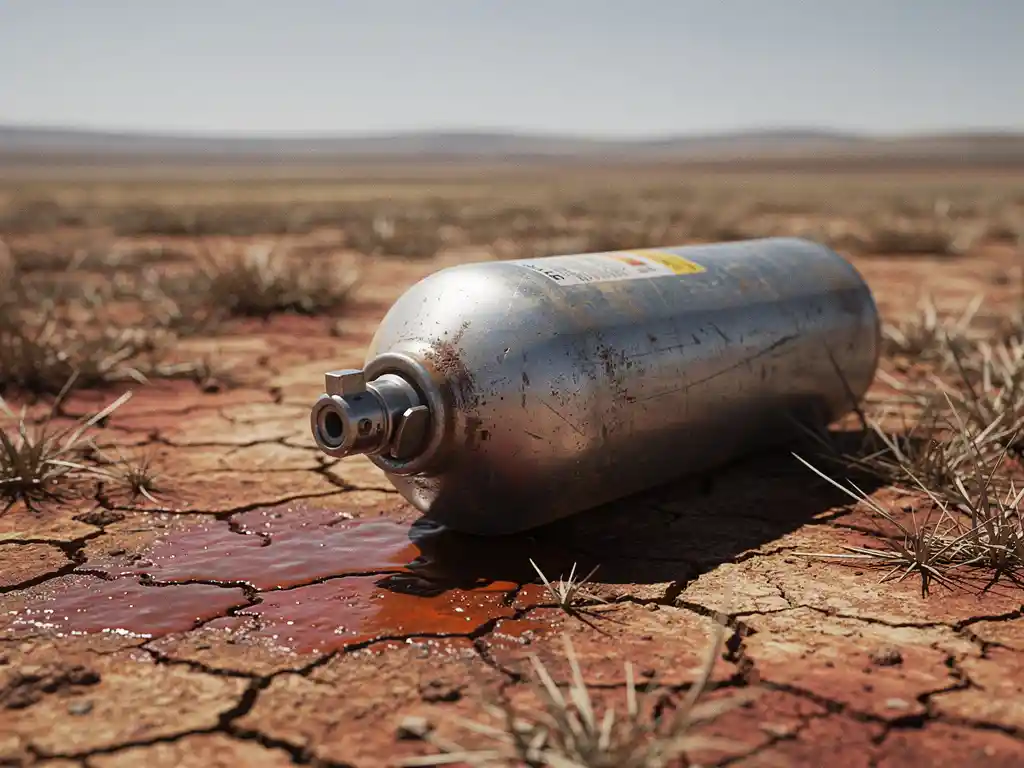
A single fire suppression system discharge carries a significant environmental cost — and that cost varies dramatically depending on the suppression agent used. Systems relying on chemical agents such as PFAS-based foams or halon alternatives can release substances that persist in soil, water, and the atmosphere for decades. The questions below unpack each dimension of that environmental impact, from chemical residues to regulatory pressure.
What chemicals are released when a fire suppression system discharges?
When a fire suppression system discharges, it releases its active suppression agent directly into the protected space and, in many cases, into the surrounding environment. The specific chemicals released depend entirely on the agent type — ranging from inert gases to synthetic fluorinated compounds, each with a distinct environmental profile.
Common suppression agents and the chemicals they release include:
- Halon-based agents: Release brominated and chlorinated compounds that deplete the ozone layer. Halon has been largely phased out under the Montreal Protocol, but legacy systems still exist.
- HFC and HFO agents (e.g. FM-200, Novec 1230): Release hydrofluorocarbons or fluoroketones into the atmosphere. While marketed as halon replacements, many contain or break down into PFAS-related compounds.
- PFAS-based foams (AFFF): Release per- and polyfluoroalkyl substances, which are highly persistent organic pollutants. Even a single discharge can contaminate groundwater and soil in the immediate area.
- CO2 systems: Release carbon dioxide, a greenhouse gas, in large volumes. While CO2 itself is not chemically toxic to ecosystems, the volume discharged in a suppression event is significant.
- Nitrogen and other inert gases: Release only naturally occurring atmospheric gases. Nitrogen makes up approximately 78% of the air we breathe and leaves no chemical residue.
The chemical footprint of a discharge is not limited to the moment of release. Residues left on surfaces, absorbed into materials, or carried into drainage systems can extend the environmental impact well beyond the initial event.
How harmful are PFAS-based fire suppression agents to the environment?
PFAS-based fire suppression agents are among the most environmentally harmful substances in use today. PFAS — per- and polyfluoroalkyl substances — are known as “forever chemicals” because their carbon-fluorine bonds are virtually indestructible under natural conditions. A single discharge can introduce PFAS contamination into soil and groundwater that persists for generations.
The environmental harm of PFAS fire suppression agents is well-documented across several dimensions:
- Soil contamination: PFAS compounds bind to soil particles and resist natural degradation. Sites where PFAS-containing foam has been discharged — including airports, military bases, and industrial facilities — have required extensive remediation efforts lasting years.
- Groundwater pollution: PFAS leaches into groundwater and drinking water supplies. Regulatory bodies across the EU, the US, and beyond have identified PFAS contamination as a major public health and environmental concern.
- Bioaccumulation: PFAS substances accumulate in living organisms and move up the food chain. Aquatic ecosystems are particularly vulnerable following a discharge near water sources.
- Long-term liability: Organizations that discharge PFAS-containing agents face growing legal and financial liability as environmental regulations tighten and cleanup standards become stricter.
In 2026, the regulatory landscape around PFAS is tightening significantly in Europe and North America. The EU’s PFAS restriction under REACH is advancing, and the pressure on organizations to eliminate PFAS from their operations — including fire suppression — is accelerating.
What is the global warming potential of different suppression agents?
Global warming potential (GWP) measures how much heat a substance traps in the atmosphere relative to CO2 over a given period. Many synthetic fire suppression agents have GWP values hundreds or thousands of times higher than CO2, making a single discharge event a meaningful contributor to climate impact.
To put this in perspective, consider the relative GWP values of common agents:
- FM-200 (HFC-227ea): Has a GWP of approximately 3,220 over 100 years. A standard discharge in a medium-sized cabinet releases a volume of agent with a climate impact equivalent to several tonnes of CO2.
- Novec 1230 (FK-5-1-12): Marketed as a low-GWP alternative with a GWP below 1, but recent research has raised questions about its atmospheric breakdown products and potential PFAS classification.
- CO2: Has a GWP of exactly 1, but suppression systems discharge it in large quantities, and the sheer volume released in a single event is environmentally significant.
- Nitrogen and inert gas blends: Have a GWP of effectively zero. Nitrogen is a naturally occurring, non-greenhouse gas that contributes nothing to atmospheric warming when discharged.
For organizations with sustainability commitments, net-zero targets, or environmental reporting obligations, the GWP of a fire suppression agent is a legitimate operational consideration — not just a compliance checkbox.
Does a nitrogen-based suppression system leave any environmental residue?
No. A nitrogen-based fire suppression system leaves zero environmental residue after discharge. Nitrogen is an inert, naturally occurring gas that makes up the majority of Earth’s atmosphere. When released, it disperses harmlessly and leaves no chemical deposits on surfaces, no contamination in soil or water, and no atmospheric pollutants.
This makes nitrogen fundamentally different from virtually every chemical suppression agent on the market. There is no cleanup required after a nitrogen discharge, no remediation of affected surfaces, and no risk of secondary contamination through drainage or HVAC systems. For sensitive environments such as server rooms, electrical cabinets, and battery energy storage systems, this is especially valuable — the protected equipment can be inspected and returned to service without dealing with chemical residue on components.
Beyond the discharge itself, nitrogen suppression systems also avoid the environmental burden associated with agent manufacturing. Synthetic fluorinated compounds require energy-intensive production processes and carry embedded environmental costs before they ever reach a fire suppression cylinder. Nitrogen, by contrast, is extracted directly from the atmosphere.
What are the hidden environmental costs beyond the discharge itself?
The environmental cost of a fire suppression system discharge extends well beyond the moment the agent is released. Hidden environmental costs accumulate across the full lifecycle of the system and the incident response — and for chemical agents, these costs can be substantial.
Post-discharge cleanup and remediation
Chemical suppression agents that coat surfaces, penetrate materials, or enter drainage systems require professional cleanup. For PFAS-based agents, this can mean soil excavation, water treatment, and long-term environmental monitoring. Even agents considered “cleaner” than PFAS often leave residues that require specialist disposal, generating additional waste and resource use.
Equipment damage and replacement waste
Many chemical suppression agents damage the very equipment they protect. Corrosive residues, moisture from certain agents, and chemical reactions with electronic components can render hardware unusable. The environmental cost of manufacturing replacement equipment — circuit boards, server components, battery modules — is significant and rarely factored into the suppression system’s environmental footprint.
Agent recharge and disposal
After a discharge, pressurized chemical suppression systems must be recharged with new agent. Spent agent cylinders require specialist handling, and many synthetic agents cannot simply be vented or disposed of conventionally. This creates a recurring environmental burden every time the system activates — whether in a genuine fire event or an accidental discharge.
How do environmental regulations affect fire suppression system choices?
Environmental regulations are increasingly shaping which fire suppression agents organizations can legally use, purchase, and maintain. In 2026, the regulatory pressure on fluorinated and PFAS-containing suppression agents is at its highest point yet, with major implications for procurement decisions across Europe and beyond.
Key regulatory developments affecting suppression agent choices include:
- EU PFAS restriction under REACH: The European Chemicals Agency is advancing a broad restriction on PFAS substances, which would affect a wide range of fluorinated suppression agents currently in use. Organizations operating in Europe face a narrowing window to transition away from affected agents.
- F-Gas Regulation: The EU’s revised F-Gas Regulation targets high-GWP fluorinated gases, including several HFC-based suppression agents. Phase-down schedules are already reducing availability and increasing costs for non-compliant agents.
- National environmental liability laws: Several European countries have introduced or are strengthening liability frameworks for PFAS contamination, meaning organizations that discharge PFAS-containing agents could face direct financial and legal consequences.
- Corporate ESG reporting: As environmental, social, and governance reporting becomes mandatory for larger organizations under frameworks such as the EU’s Corporate Sustainability Reporting Directive (CSRD), the environmental profile of fire suppression systems becomes a reportable operational factor.
Proactive organizations are not waiting for regulatory deadlines. They are reviewing their suppression systems now, identifying PFAS and high-GWP agents in their infrastructure, and transitioning to compliant, lower-impact alternatives before restrictions force a rushed replacement.
How ExxFire addresses the environmental cost of fire suppression
ExxFire’s fire detection and suppression systems are built around non-pressurized nitrogen gas — the only suppression agent with zero GWP, zero chemical residue, and zero PFAS content. For organizations looking to eliminate the environmental impact of fire suppression, ExxFire’s approach removes the problem at its source.
Here is what makes ExxFire’s systems the most environmentally responsible choice available:
- Zero chemical residue: Nitrogen leaves no deposits on sensitive electronics, no contamination in drainage systems, and no requirement for post-discharge cleanup.
- PFAS-free by design: ExxFire’s Cool Gas Generator technology contains no fluorinated compounds, making it fully compliant with current and anticipated PFAS regulations.
- Non-pressurized storage: Nitrogen is stored in a solid, non-pressurized state, eliminating the risk of accidental discharge and reducing the logistical burden of managing high-pressure cylinders.
- Early detection prevents large discharges: The integrated aspirating smoke detection component identifies fire at the earliest possible stage, meaning suppression is targeted and proportionate — further minimizing environmental impact.
- Low TCO with minimal maintenance: Easy self-installation and low maintenance requirements reduce the ongoing resource consumption associated with system upkeep.
ExxFire’s systems are tested and certified by CNPP in France and DMT (part of TÜV Nord) in Germany, giving procurement managers, facility managers, and sustainability officers the independent verification they need to justify the transition. If you are evaluating your current suppression infrastructure against tightening environmental standards, contact ExxFire to discuss a compliant, future-proof solution for your critical assets.
Related Articles
- Why is multi-sensor fire detection more reliable than single-sensor systems?
- Are chemical fire suppression agents being phased out in Europe?
- Why is fire suppression agent selection a sustainability decision?
- How do inert gas fire suppression systems reduce greenhouse gas emissions?
- What are the alternatives to PFAS-containing fire suppression foam?